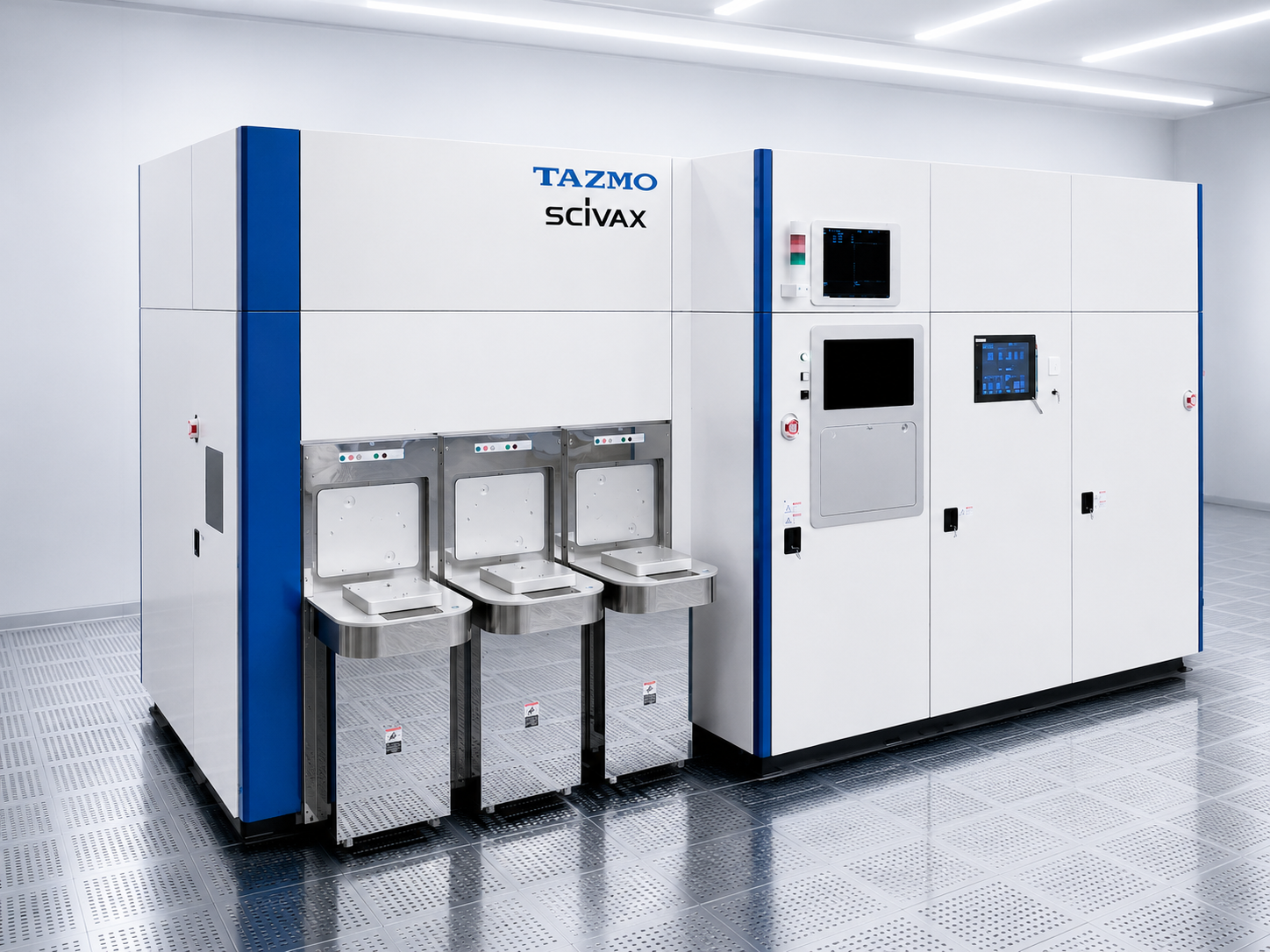
Dyad® 200
A production UV imprint system jointly designed and developed with Tazmo Co., Ltd., a semiconductor manufacturing equipment manufacturer, integrating SCIVAX’s diverse imprint mechanisms into a single platform. The Hard-to-Hard imprint method, which uses a rigid substrate as the replica stamp base material, enables high-precision, high-yield mass production.
Improved Uniformity for
AR Glass Waveguides
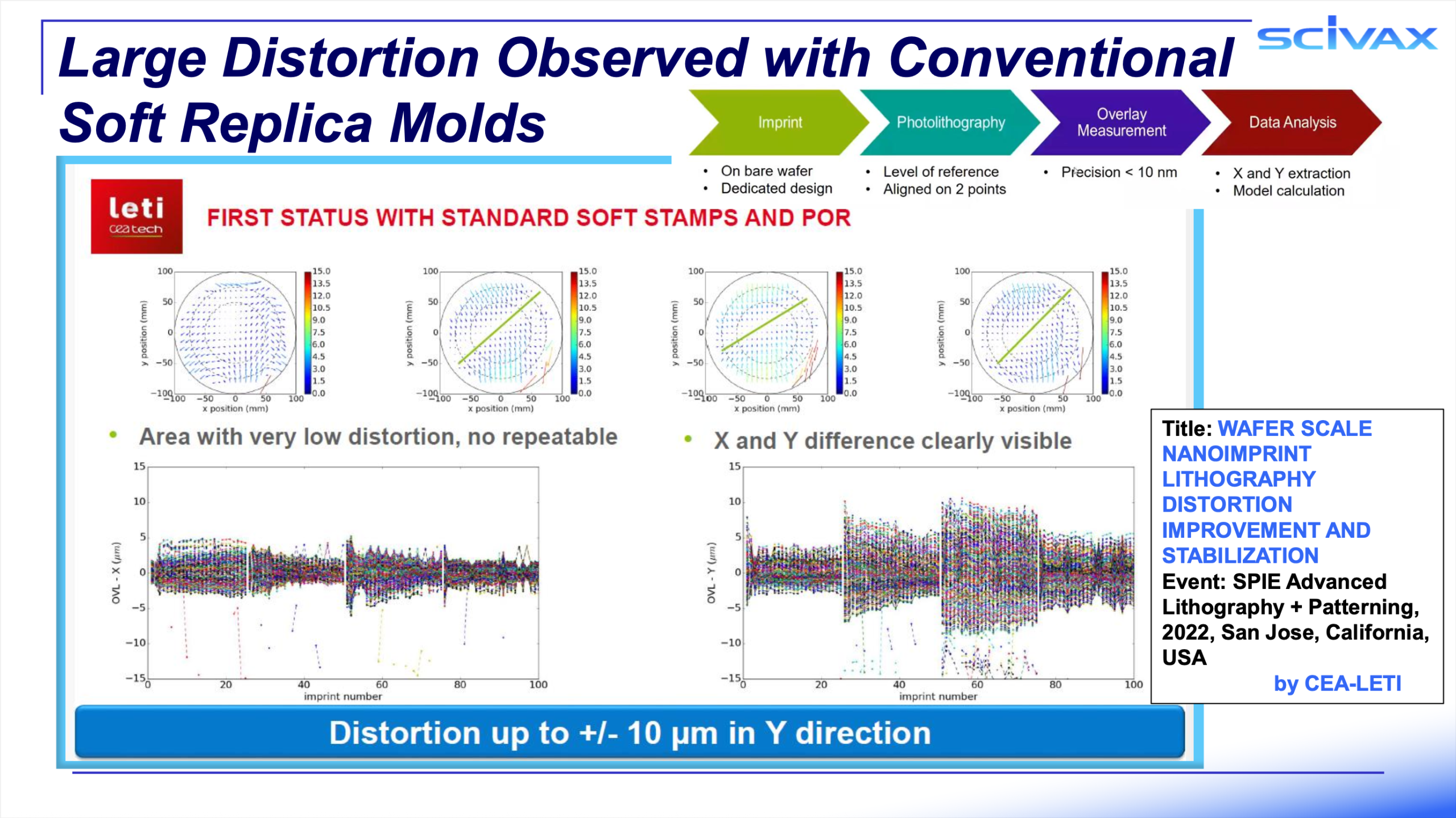
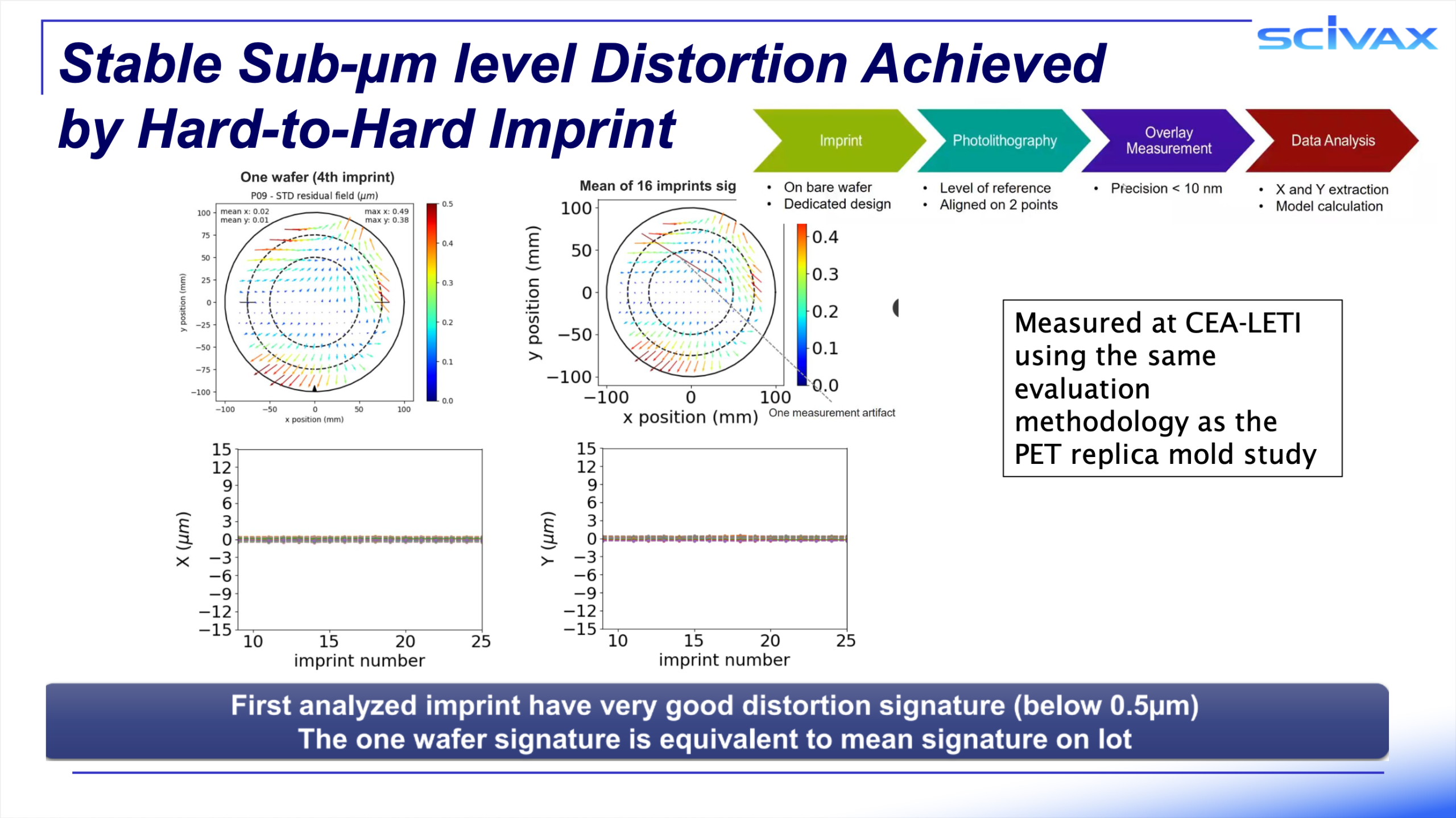
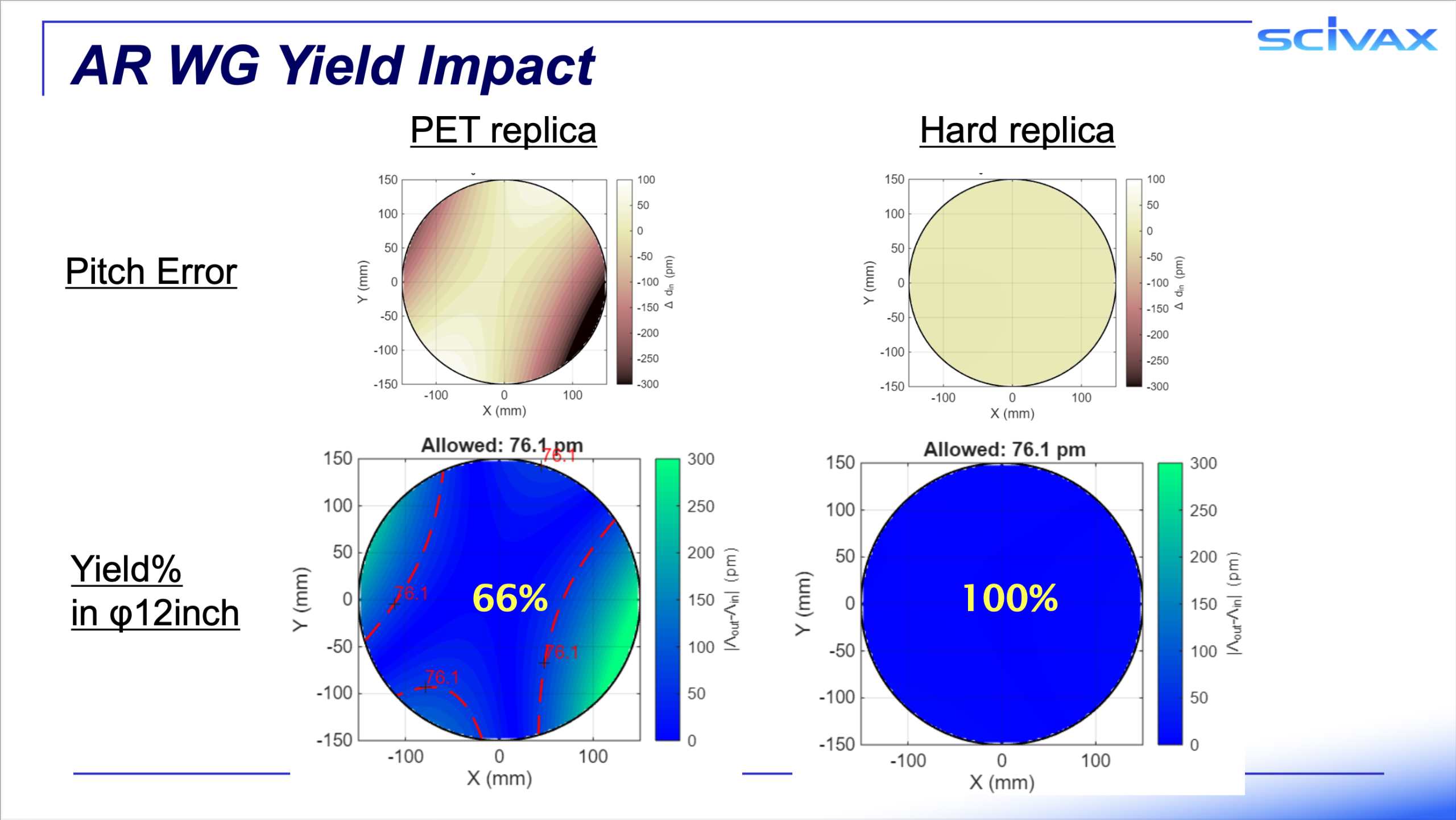
Compared with flex-substrate replicas, imprint distortion across the wafer is significantly reduced. Improved uniformity and image quality have been demonstrated in waveguide molding for AR glasses.
Overlay Alignment
≤±1μm
Achieves ≤±1μm with an optional alignment mechanism at mass-production level. Supports device manufacturing that requires precise pattern alignment.
Improved Release Performance for
High-Aspect-Ratio Structures
Mitigates replica damage that can occur during demolding of high-aspect-ratio structures such as pillar and hole shapes. Improves yield and productivity simultaneously.
Load port breakdown: 2 for imprint substrates / 1 for master molds / 1 for replica molds
| Item | Dyad® 200 |
|---|---|
| Molding method | UV nanoimprint (UV-LED λ=365nm) |
| Wafer handling | FOUP to FOUP |
| Work size | Φ200mm (0.3mm ≤ t ≤ 1mm) |
| Mold size | Φ200mm (0.3mm ≤ t ≤ 1mm) / Φ300mm (0.7mm) |
| Pressing force | ≤ 0.90MPa |
| Vacuum level | ≤ 50Pa |
| Demolding mechanism | Vertical demolding |
| Alignment accuracy | ≤ ±1μm (optional) |
| Throughput | 20 wafers/hour (process-dependent) |
| Overall dimensions | W5,460 × D2,560 × H2,500 (mm) |
For the Dyad® 300 model compatible with Φ300mm wafers, please contact us separately.
Our representative will provide information on system specifications, implementation requirements, and quotations. Please feel free to contact us first.
Inquiries / Request Materials